Every January, Huntersville salons see the same hands: cuticles split and sore, nails snapping at corners they survived all summer, and finishes lifting on nails that held perfectly in October. Clients tend to blame the last product applied. The actual culprit is the season. Cold air outside holds little moisture, heated air inside holds even less, and the repeated swing between them dries the nail plate and the skin around it until both lose their flexibility.
A nail that cannot flex does not bend under pressure, it breaks. This guide covers the winter mechanics of that, the two or three habits that genuinely prevent it, and how to adjust salon services in the cold months so a set survives to spring.
What winter actually does to a nail
The nail plate is layered keratin, and its strength depends on a balance: hard enough to protect, flexible enough to give. Water content is what keeps it flexible. In heated winter air, nails lose moisture steadily, and each handwashing and sanitizer use strips more. The result is a plate that feels hard but behaves brittle, peeling at the edges and snapping cleanly instead of bending.
Cuticles suffer in parallel and matter more than they look. The cuticle seals the gap between skin and nail, and when it cracks, that seal opens. Open cuticles sting in cold air, catch on everything, invite picking, and give bacteria a way in. Most winter nail misery, the splits, the sore corners, the hangnails, starts as a moisture problem at that seal rather than a problem with the nail itself.
Cuticle oil: the one product that earns its place
If winter nail care had a single prescription it would be cuticle oil, applied daily, ideally twice. Oil does not moisturize the way water does, but it seals the nail and cuticle against water loss, keeps the plate flexible, and softens the cuticle so it stops splitting. The best application time is after a shower or handwashing, when the nail holds the most water and the oil can lock it in.
Keep the bottle where the habit already exists: beside the toothbrush, on the nightstand, at the desk. Fancy formulations matter far less than frequency. A plain oil applied every day outperforms an expensive one applied when you remember. Within two weeks of daily use, most people see the winter cracking stop, because the material itself has changed back into something that bends.
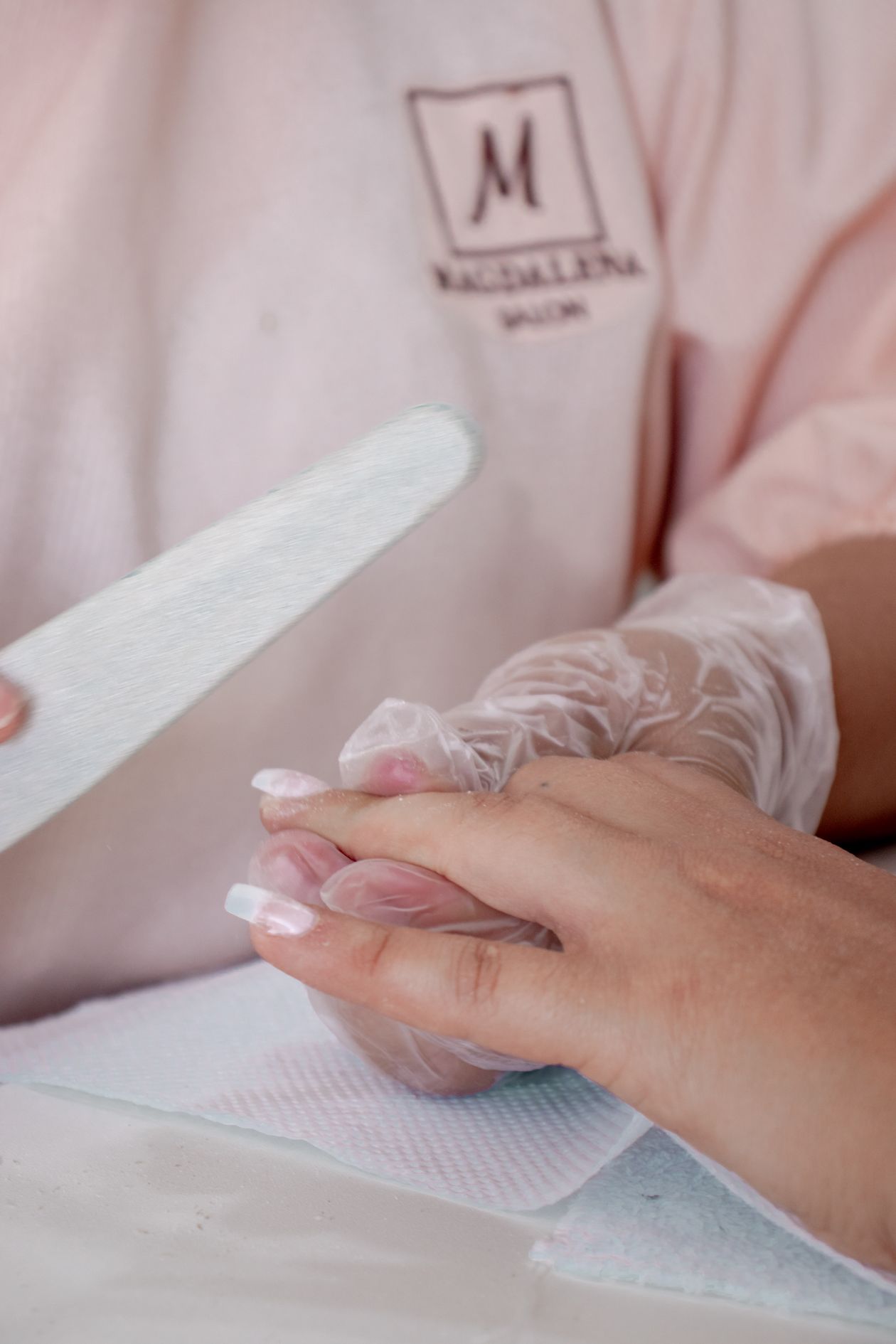
Gloves, water, and the dish problem
Hot water is winter's second villain. Long, hot exposure swells the nail plate, and the repeated swelling and shrinking as nails dry works the layers apart, which is why winter nails peel. Dish gloves and cleaning gloves are not a fussiness. They are the difference between a finish that holds three weeks in January and one lifting at the edges in ten days, because hot soapy water attacks the bond at exactly those edges.
The same logic trims shower habits a little and changes handwashing where you can: warm rather than hot water, a moisturizer kept at the sink and actually used, and hand cream before bed, when it gets hours to work undisturbed. None of this is elaborate. Winter nail care is a set of small barriers between your nails and dry air and hot water, maintained for about twelve weeks.
- Cuticle oil daily, twice if cracking has started
- Dish and cleaning gloves on for hot water work
- Warm, not hot, water for hands where you can choose
- Hand cream at the sink and at the bedside, actually used
- Slightly shorter, rounded shape for brittle winter nails
- Pedicure schedule kept through winter for heel checks
- A few coating-free weeks if peeling will not settle
Adjusting salon services for the cold months
Tell the technician your nails have gone brittle. Winter sets are often built slightly differently: a touch shorter, corners rounded rather than squared, because square corners on a dry nail are where the snaps begin, and sometimes a strengthening base under the finish. Clients who fight the season every year often switch to a shorter, hardier shape in November and grow back into their summer shape in April without a single break in between.
Pedicures matter in winter too, even with toes hidden. Heels crack in dry air, and a crack that reaches living skin is a genuine problem, not a cosmetic one. A winter pedicure schedule, even stretched to six weeks, keeps heels filed before they split and cuticles sealed. Feet in boots all day also appreciate the inspection: problems caught in January are small ones.
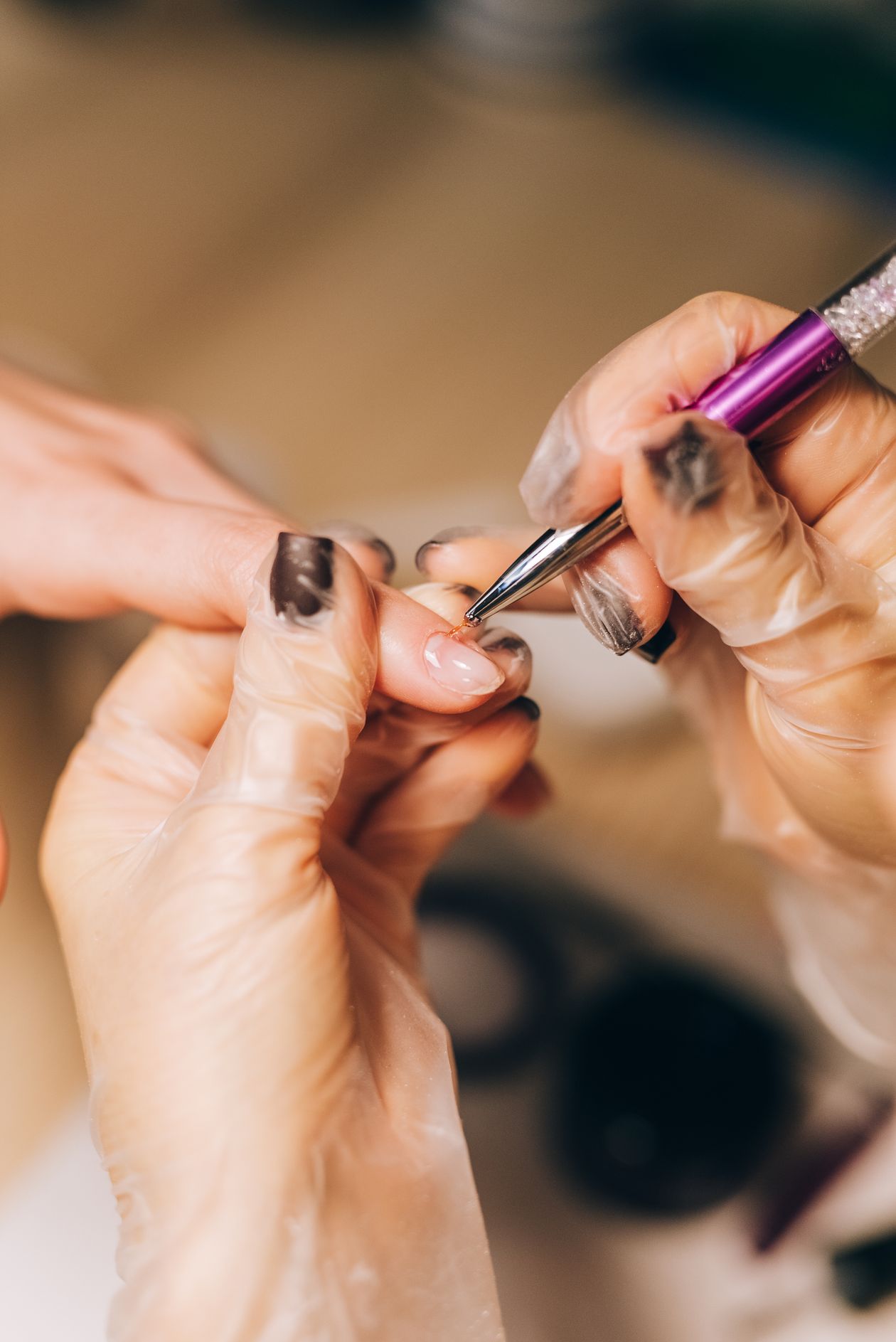
When winter damage needs a break
Sometimes the right winter prescription is a rest. Nails that are peeling in layers, cuticles that are repeatedly inflamed, or a run of breaks despite good habits may need a few weeks of basic manicures, oil, and no coating while the damaged plate grows out past the free edge. Fingernails replace themselves in about six months, but the visible damage zone clears much sooner, usually within four to eight weeks of growth.
Use the break properly: short length, rounded shape, oil twice a day, gloves for water. A break spent soaking nails in miracle products and filing hopefully does little. Time and moisture balance do the work. By the time spring humidity returns to Huntersville, nails that were rested and oiled meet it in condition to hold any finish you like.
Common questions
Why do my nails break more in winter?
Dry heated air drains moisture from the nail plate, making it brittle instead of flexible. A brittle nail snaps under pressure that a flexible nail would bend through.
Does cuticle oil really help?
Yes, it is the most effective winter habit. Applied daily, ideally after washing or showering, it seals in moisture, keeps nails flexible, and stops cuticles splitting.
Should I take a break from polish in winter?
If nails are peeling or breaking repeatedly despite oil and gloves, a few weeks of basic manicures without coating lets the damaged section grow out and usually solves it.
Photos in this guide are representative stock images.
← All guides from Solar Nails Spa← Back to Solar Nails Spa