A pedicure asks more trust than almost any other personal service. Your feet soak in shared equipment, metal tools work close to skin, and small nicks are part of the territory. North Carolina regulates nail salons for exactly these reasons, and most salons work hard to do it right. The client's job is simply to be able to read the signs, because a salon's hygiene is visible in its details long before any tool touches your foot.
This is a practical checklist for Huntersville clients: what the tub setup should look like, where the tools should come from, what your own feet should and should not bring into the chair, and the few situations where the right move is to reschedule.
The tub tells the story
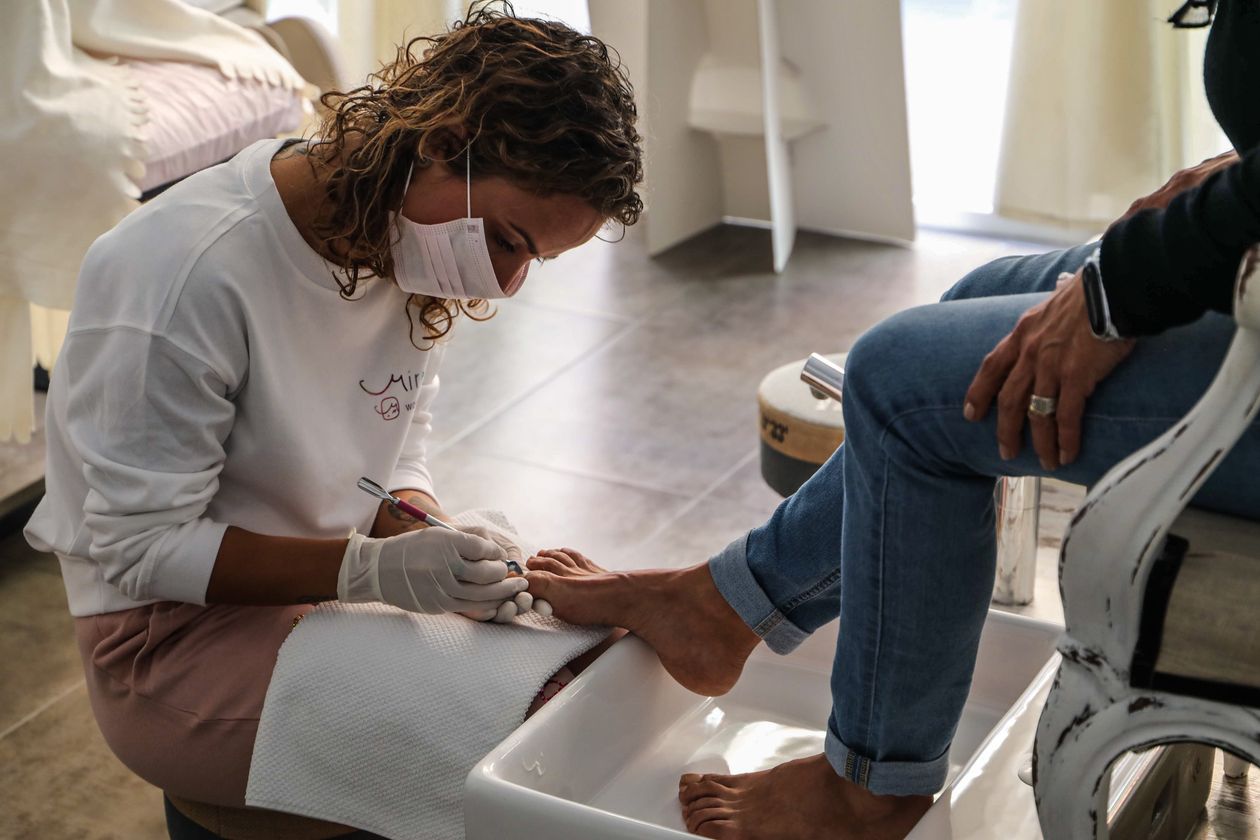
Modern spa pedicure chairs should use a fresh disposable liner in the foot bath for each client, or be thoroughly cleaned and disinfected between clients where liners are not used. A liner going in fresh, in front of you, is the clearest good sign in the building. It means the salon has built the cost and the habit of single-use barriers into every service rather than treating cleanliness as an extra.
Watch the water too. The tub should fill fresh for you, not sit pre-filled from an earlier service, and the jets and surfaces should look maintained rather than filmed or stained. None of this requires expertise to judge. A salon that keeps the visible water and plastic clean is almost always keeping the disinfection log you cannot see.
Tools should arrive sealed or from disinfectant
Metal implements, cuticle pushers and nippers, should come from a sealed sterilization pouch opened in front of you or from a disinfectant solution, and many salons use autoclaves, the same steam sterilizers dentists use, to process them. Files, buffers, and pumice are porous and cannot be disinfected reliably, so those should be new for you and either thrown away or sent home with you afterwards.
If you are ever unsure, ask. How do you clean your tools is a normal question in a nail salon, and a well-run shop answers it proudly and specifically. Vague answers, or tools arriving loose in a drawer with no pouch and no disinfectant in sight, are information. You are allowed to act on it, politely, before the service starts rather than after.
Your side of the hygiene bargain
Clients bring part of the safety equation with them. Do not shave your legs the day of a pedicure. Freshly shaved skin has microscopic openings, and soaking that skin in any shared water raises the chance of irritation or infection. For the same reason, open cuts, cracked heels with broken skin, or an active flare of athlete's foot are reasons to move the appointment, and a good salon will thank you for saying so.
Tell the technician about diabetes or circulation problems before your feet go in the water. Those conditions change how a pedicure should be done: water temperature needs care, cuticle work needs a gentler hand, and some steps get skipped entirely. Salons would rather adjust the service than discover a condition halfway through it, and disclosing takes ten seconds.
- Fresh liner placed in the foot bath in front of you
- Tools from a sealed pouch or disinfectant, opened for your service
- Files, buffers, and pumice new, and discarded or sent home after
- Fresh towel and a swept station from the previous client
- Hands washed or gloves changed between clients
- No blades used on calluses or live skin
- Water filled fresh for your service, never pre-standing
During the service: what should not happen
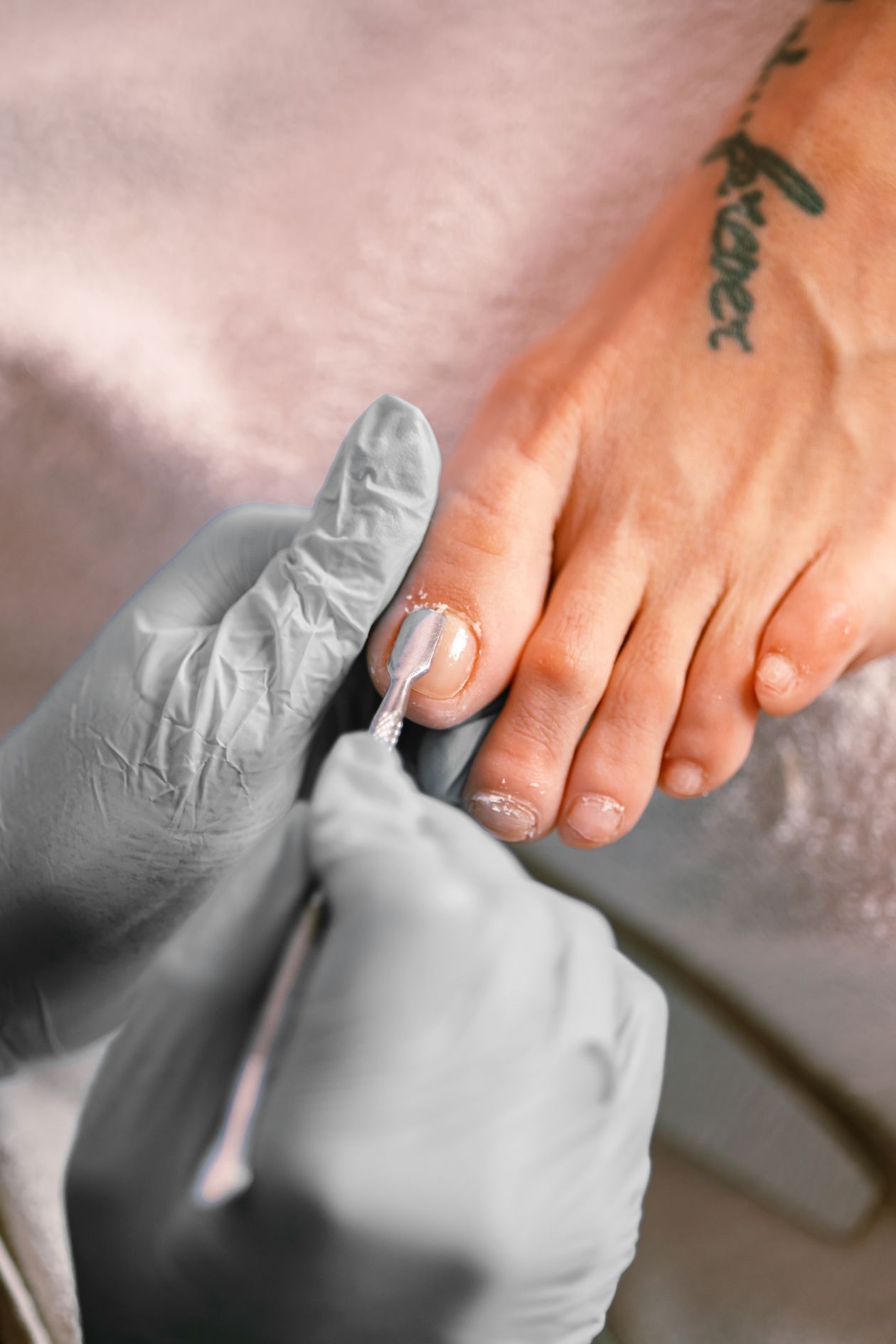
Cutting cuticles aggressively, and especially cutting live skin or callus with a blade, is not part of a safe pedicure. Credo blades and cheese-grater style callus shavers are prohibited for licensees in many states, North Carolina among those that restrict cutting tools, because they create exactly the open skin a soak should never meet. Gentle filing and pumice work is the safe version of the same job.
Pain is also information. A pedicure can involve pressure and the odd tender spot, but sharp pain, bleeding, or a technician who waves off either one is a stop signal. Say so, plainly and early. The reputable pattern in any service trade is that the professional would rather stop and look than continue and hope, and pedicures are no exception.
Reading the whole room
Step back and the general signals agree with the specific ones. Floors swept between clients, towels that are plainly fresh, bottles labeled, staff washing hands or changing gloves between services, single-use items treated as single-use. A salon's standard is a habit, and habits show everywhere at once. The converse is also true: sloppiness in the visible corners predicts sloppiness in the disinfection jar.
None of this is about fear. Pedicures in regulated salons are routine and safe, and Huntersville clients get them every day without incident. The point of reading a salon well is that it lets you relax completely in the chair, which is, after all, the entire purpose of booking a pedicure in the first place.
Common questions
Should the pedicure tub have a liner?
A fresh disposable liner per client is the clearest good sign. Where liners are not used, the tub should be cleaned and disinfected between clients.
Is it safe to get a pedicure with cracked heels?
If the skin is broken or you have an active foot infection, reschedule. Intact but dry skin is fine, and the technician can work gently around problem areas you point out.
Why should I not shave before a pedicure?
Freshly shaved legs have microscopic openings in the skin. Soaking that skin increases the chance of irritation or infection, so shave at least a day before instead.
Photos in this guide are representative stock images.
← All guides from Solar Nails Spa← Back to Solar Nails Spa